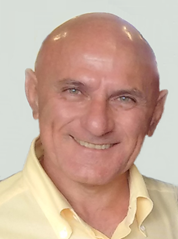
Professor Carlo Cecati |
Professor Carlo Cecati Department of Information Engineering, Computer Science and Mathematics, University of L’Aquila and DigiPower Ltd. , L’Aquila, Italy Professor Carlo Cecati, IEEE Fellow, received the Dr. Ing. Degree in Electrotechnical Engineering from the University of L’Aquila, L’Aquila, Italy in 1983. Since then he has been with the same university becoming full professor in 2006 and being rector’s delegate from 2005 till 2013. In 2007 he has been the founder and CEO of DigiPower srl., a University of L'Aquila spin-off, becoming CTO since 2012. From September 2015 to September 2017, he has been a Qianren Talents Professor (1000 Talents Program distinguished professor) with Harbin Institute of Technology, Harbin, China. Prof. Cecati’s research interests include power electronics, distributed generation, and smart grids. In these fields he authored around 200 journal and conference papers. From 2013 to 2015 he served as the Editor-in-Chief of the IEEE TRANSACTIONS ON INDUSTRIAL ELECTRONICS. Prof. Cecati has been a corecipient of the 2012 and the 2013 Best Paper Award from the IEEE TRANSACTIONS ON INDUSTRIAL INFORMATICS, the 2012 Best Paper Award from the IEEE Industrial Electronics Magazine; in 2017 he received the Antony J. Hornfeck Award for his contributions to the IEEE Indutrial Electronics Society. Topic: |
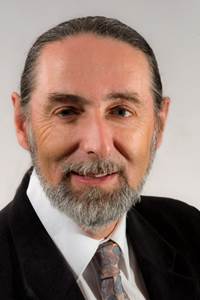
Professor Graham Holmes |
Professor Graham Holmes Professor Holmes graduated from the University of Melbourne with a B. Eng. in 1974. He has a Masters degree from the same university in power systems engineering, and a PhD from Monash University in power converter modulation theory. He was a faculty member at Monash University for 26 years, where he established the Power Electronics Research Group in 1996 to support graduate students and research engineers working together on both pure and applied R&D projects. The interests of the group include fundamental modulation theory, VSI current regulators, active filter systems, resonant converters, current source inverters, and multilevel converters. In 2002 he formed a commercial R&D company from this group, specialising in the development of tailored power electronic conversion systems for unusual applications. In 2010, Professor Holmes was appointed as Innovation Professor – Smart Energy Systems at RMIT University, where he is currently extending his research interests to work with industry and government in the area of Smart Grids and Smart Energy technologies. Professor Holmes has been a major contributor to the field of power electronics research for nearly 30 years. His primary research focus has been to investigate fundamental questions concerning the principles of modulation and closed loop control of switching power converters. He has published a major theoretical reference book on this subject, together with over 250 refereed journal and conference articles (11000+ citations). He is a Fellow of the IEEE, reviews papers for all major IEEE transactions in his area, and has been an active member of the Industrial Applications, Power Electronics Societies of the IEEE for over 25 years. Topic: Abstract: One foundational technology of Distributed Generation is the Power Electronic Converter, which can rapidly and flexibly control electrical energy almost instantaneously on a moment by moment basis. Since the 1950’s, PE converters have become mainstream technology for industry, accurately controlling rotating machines, precisely processing energy with minimum energy wastage, and supporting a myriad of other applications. More recently, as their power handling capacity continues to increase, they are becoming very attractive for distributed generation systems where they can manipulate electrical energy in ways that simply cannot be done using rotating machines. The challenge at present is to decide exactly what we want to do with this capability. This presentation will explore why power electronic converters are so flexible and attractive for Distributed Generation systems. It will firstly reflect on how the fundamental properties of these systems make them so versatile, and then will proceed to show how these properties particularly suit Distributed Generation needs and requirements. Finally, the current challenges of large scale usage of power electronic converters in electrical grid systems will be considered, looking at both technical challenges that are still to be overcome, and the operational control challenges that are still in the early stages of development. |
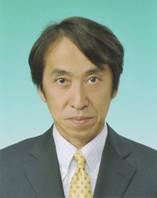
Professor Makoto Iwasaki |
Professor Makoto Iwasaki Department of Electrical and Mechanical Engineering, Nagoya Institute of Technology, Japan Professor Makoto Iwasaki received the B.S., M.S., and Dr. Eng. degrees in electrical and computer engineering from Nagoya Institute of Technology, Nagoya, Japan, in 1986, 1988, and 1991, respectively. Since 1991, he has been with the Department of Computer Science and Engineering, Nagoya Institute of Technology, where he is currently a Professor at the Department of Electrical and Mechanical Engineering. As professional contributions of the IEEE, he has been an AdCom member of IES in term of 2010 to 2019, a Technical Editor for IEEE/ASME TMech from 2010 to 2014, an Associate Editor for IEEE TIE since 2014, a Management Committee member of IEEE/ASME TMech (Secretary in 2016 and Treasurer in 2017), a Co-Editors-in-Chief for IEEE TIE since 2016, a Vice President for Planning and Development in term of 2018 to 2019, respectively. He is IEEE fellow class 2015 for "contributions to fast and precise positioning in motion controller design". He has received the Best Paper Award of Trans of IEE Japan in 2013, the Best Paper Award of Fanuc FA Robot Foundation in 2011, the Technical Development Award of IEE Japan in 2017, The 3rd Nagamori Awards in 2017, The 50th Ichimura Prize in Industry for Excellent Achievement in 2018, respectively. His current research interests are the applications of control theories to linear/nonlinear modeling and precision positioning, through various collaborative research activities with industries. Topic: Abstract: The keynote speech presents the fast and precision motion control techniques, where a 2-degrees- of-freedom (2DOF) control framework is especially handled as one of practical and/or promising approaches to improve the motion performance. Actual issues and relevant solutions for each component in the 2DOF control structure are clarified, and then, one of examples, a 2DOF controller design for robust vibration suppression positioning, is presented as an application to industrial high precision positioning devices. |